


What the platform actually does
Picture a community library where every book talks back. That is roughly the shape of this service: a roleplay and conversation hub where users interact with AI characters built by the community or themselves. The primary engine is natural language processing, so most of the experience happens through typed dialogue. A character card defines personality, backstory, speaking style, and scenario, and the algorithm generates responses that try to stay in character across long sessions.

Beyond pure text, the platform layers on optional features: synthesised voice replies, generated images, and persistent memory across chats. Each of these uses more compute than a plain text message, which is why most AI girlfriend services, including this one, gate them behind tokens or a subscription tier. If you want a broader primer first, the page what is Janitor AI covers the basics.
Text chat and the language model
Text chat is the feature most people use daily. You pick a bot, open a conversation, and the model produces replies based on the character definition plus the running history of your exchange. Quality depends heavily on which model is connected. The platform supports proxy connections to external models, meaning your experience can shift dramatically if you switch from a smaller open-source model to a larger commercial one.
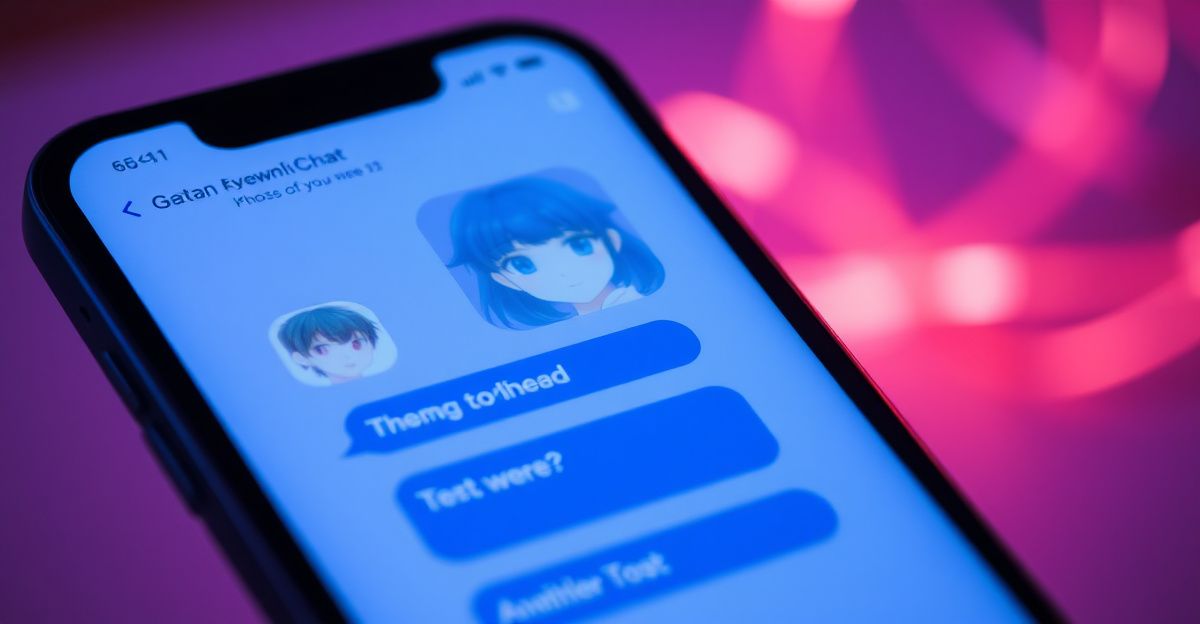
Last month I wrote a detailed comparison of three AI girlfriend apps, focusing on how their natural language processing handled tone. One platform misread sarcasm in roughly 40% of my test prompts, while another handled irony with surprising competence. The machine learning models behind these digital companions vary significantly, and the same is true within Janitor AI depending on which backend you route through. Response length, coherence across a 50-message session, and emotional simulation all change with the model choice.
Customisation extends to advanced settings like temperature, repetition penalty, and context window. These are the dials that decide whether your companion sounds bland and repetitive or unpredictable and creative. For new users, the defaults are usually fine, but power users tweak them to match a specific writing style.
Voice replies and audio output
Voice is an add-on layer rather than the default. When enabled, the system converts the AI's generated text into spoken audio using a text-to-speech engine. Different voice profiles are available, and tokens are typically spent per audio message, with voice replies costing more than text because of the additional processing involved.
The user experience here is closer to a podcast snippet than a phone call. There is no real-time back-and-forth voice conversation by default; you read or listen to the reply, then type your next message. That distinction matters because some competitors advertise live voice calls, which is a different technical product. Audio quality depends on the voice model selected, and accents, pacing, and emotional inflection still lag behind the best standalone voice tools on the market.
Image generation
On a quiet Tuesday afternoon in October, I queued up an image prompt to see how the diffusion pipeline handled a specific brief: a character in a rainy Edinburgh street, low camera angle, navy raincoat. It cost me roughly ten times what a single chat message would, which lines up with the industry-standard pricing structures I have tracked. The system accepts descriptions of outfit, mood, setting, and camera angle, and the render arrived in under a minute. What I noticed most was how small prompt tweaks, like swapping "misty" for "foggy", shifted the whole composition.
Content filters apply to image prompts in the same way they apply to text. Prohibited categories include real-person impersonation, illegal material, and non-consensual themes. The filter runs both before generation, scanning your prompt, and after, scanning the output. False positives do happen, which is one of the medium-frequency complaints recorded across this vertical.
Token economy and pricing structure
The token model is standard across AI girlfriend platforms. A rough industry benchmark looks like 1 token per chat message, 5 tokens per voice reply, and 10 tokens per generated image, with special scenarios costing 50 or more. Token packs commonly sit around 4.99 for 100 tokens or 19.99 for 500 tokens. Tokens often expire after 12 months of inactivity, which is worth checking before you buy a large pack.
Subscription tiers usually sit alongside the token system. A basic free tier covers casual text chat with limits, while premium tiers near 9.99 a month unlock unlimited chat plus voice and image allowances. VIP tiers around 29.99 a month add priority access and advanced features. For a deeper look at the credit system specifically, see Janitor AI tokens.
Data handling and privacy
Data privacy is a recurring question, and the honest answer is that staff at any chatbot company can technically access logs if moderation or legal compliance requires it. Industry standards involve encryption at rest using AES-256 and in transit using TLS 1.3, with chat logs typically retained for 90 days after account deletion and anonymised analytics kept indefinitely. The GDPR, in force since May 2018, gives UK and EU users rights to access, correct, or delete their personal data through account settings.
Voice recordings and image prompts are treated as personal data and fall under the same retention rules. If you want a clearer picture of the back-end pipeline, the explainer on how Janitor AI works goes into the request flow.
Content rules and what is not allowed
Prohibited content covers illegal activity, hate speech, child exploitation material, non-consensual themes, and impersonation of real people including celebrities. Filtering happens through keyword scanning and semantic analysis on the input side, plus automated classifiers on the output side. Human moderators review reports, usually within 24 hours of submission. Penalties range from warnings through temporary suspension to permanent bans.
Common complaints in this vertical centre on billing surprises, repetitive AI behaviour, and overzealous content filters flagging benign prompts. Transparency about these limits is something the better platforms emphasise, and it is reasonable to expect clear disclaimers stating that the AI has no real emotions, no consciousness, and is intended for users aged 18 and over.
UK access and age verification
Before you spend a penny, try this: open the settings tab on your account, locate the data retention notice and the age verification status, and screenshot both. If you are a UK reader, check whether your provider has implemented the Online Safety Act 2023 controls that came into force in mid-2025, which typically require a government ID and selfie through a third-party verifier. Ask yourself one question before your next session, which model is currently routed to your chat, and does it match what you are paying for?
Comments
No comments yet.
Leave a comment
Your email will not be shown. Comments are reviewed before they appear.