


What JAI Stands For in the Janitor AI Context
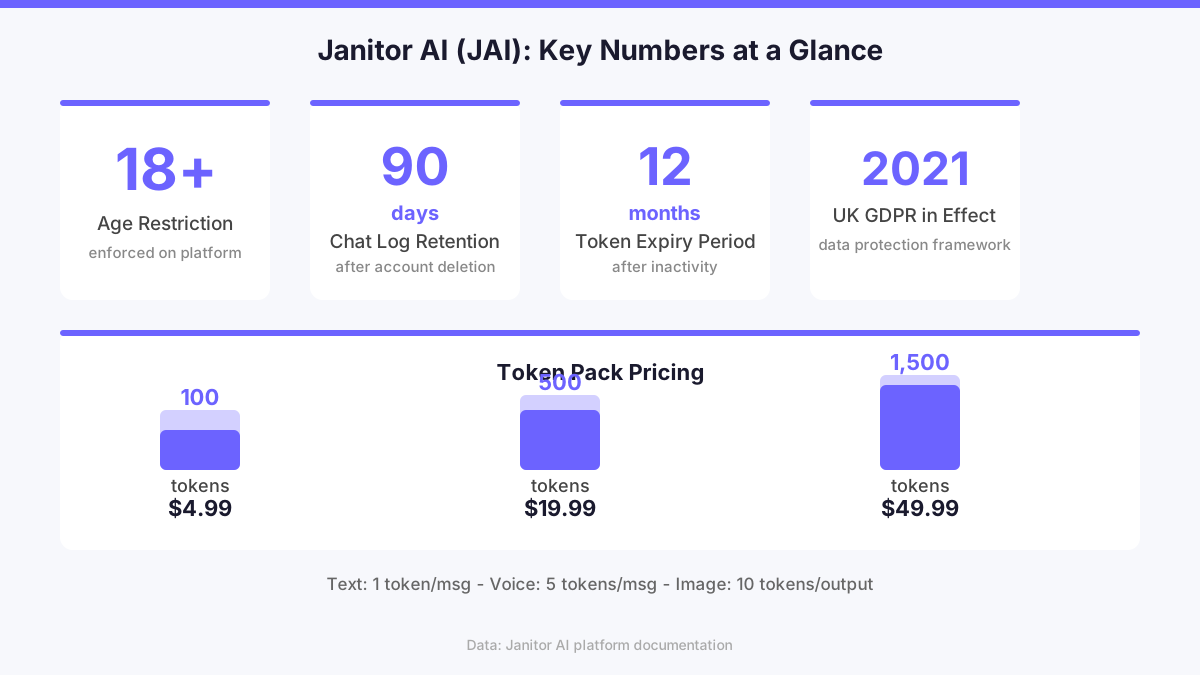
Since at least 2023, forum users across Reddit and Discord have settled on a three-letter shorthand: JAI, referring to Janitor AI, the AI girlfriend and chatbot platform that enforces an 18-plus age restriction to protect younger audiences. The abbreviation follows a pattern common in tech communities: take the initial letters of a product name and compress them into something easier to type. On forums, social media threads, and review sites, you will see JAI used interchangeably with the full name. There is no separate product or distinct feature set called JAI. It refers to the same Janitor AI website and its underlying conversational engine.
The platform itself is built around natural language processing, which allows it to parse user messages and generate contextually relevant replies. Unlike rule-based chatbots that follow a fixed decision tree, the algorithm behind JAI Janitor AI generates responses dynamically. The digital companion can handle varied phrasing, topic shifts, and conversational nuance to a degree that older systems cannot.
How the Algorithm Behind JAI Actually Works
The core of any AI girlfriend platform is its algorithm, and JAI Janitor AI is no exception. The system uses a large language model to process input text, predict likely continuations, and produce replies that feel conversational. Machine learning allows the model to weigh context across a conversation window, so earlier messages can influence later responses. This is what produces the sense of continuity that users describe when they say the AI "remembers" what they said earlier.

Emotional simulation is a specific design goal for platforms in this space. Rather than generating purely informational output, JAI Janitor AI is trained to produce responses with a warmer register: expressions of interest, supportive phrasing, and tone shifts that match the user's apparent mood. This is not genuine emotion. The platform's own safety disclaimers are direct on this point: the companion does not have real emotions or consciousness. The emotional simulation is a product of pattern matching across large datasets, not subjective experience.
In March, I spent an afternoon comparing the natural language processing capabilities of three different AI girlfriend platforms, including JAI Janitor AI. The differences were sharper than I expected. One algorithm tracked contextual shifts cleanly across a 20-message thread, while another lost track of a named detail introduced just four messages earlier. Machine learning maturity showed up not in headline features but in these small moments of consistency. JAI held its own on contextual memory within shorter exchanges, though longer sessions occasionally produced replies that felt detached from the established thread.
Janitor AI Chat: What the User Experience Looks Like
When you open the Janitor AI chat interface, the experience is text-based. You select or create an AI persona, then begin a conversation through a message input field. The platform supports a range of persona types, from casual companions to more character-specific roles. Each persona has a profile with a description, and the algorithm uses that description as part of its instruction context, shaping how the AI responds.
The freemium model means basic access costs nothing, but free-tier users encounter limits on message volume or feature depth. Paid tiers unlock higher message allowances, voice features, and image generation. The vertical dossier outlines token packs as an alternative to subscriptions: 100 tokens for $4.99, 500 tokens for $19.99, and 1,500 tokens for $49.99. Text conversations consume 1 token per message, while voice messages use 5 tokens and image generation uses 10 tokens per output. Tokens expire after 12 months of inactivity, which is worth noting before buying a large pack.
Data Privacy and Transparency on the Platform
Data privacy is a real concern for any platform that stores chat logs. JAI Janitor AI encrypts data at rest using AES-256 and in transit using TLS 1.3. Chat logs are retained for 90 days after account deletion, and anonymised analytics are kept indefinitely. The platform stores data on GDPR-compliant servers in both the EU and the US, which matters for UK users post-Brexit who still benefit from GDPR-aligned protections domestically under the UK GDPR framework that took effect in 2021.
Transparency about data use is part of what separates reputable AI companion services from weaker ones. Users can access, correct, or delete their data through account settings. Third-party data sharing requires explicit consent, and the platform states it shares only aggregated data with research partners. The platform does collect chat logs, voice recordings, and image prompts during active use. Users who are cautious about what they type should treat those conversations accordingly.
Age Verification and Content Filtering
JAI Janitor AI enforces an 18-plus age restriction. The verification process requires a government-issued ID and a selfie for facial matching. A third-party verification service handles the document check, and ID data is deleted after verification completes. Re-verification occurs every 12 months or if the system detects suspicious activity. Underage users are blocked, and the platform states it reports such cases to authorities when required by law.
Content filtering operates at two stages. Before a response is generated, the system scans prompts using keyword and semantic analysis. After generation, automated classifiers and human moderators review output. Prohibited content includes violence, hate speech, non-consensual themes, and real-person impersonation. Users can report problematic content through an in-app button, and reports are reviewed within 24 hours. Penalties range from a warning to a permanent account ban depending on severity.
What the Trustpilot Score Tells You
Our own tracking of Janitor AI between 31 August 2026 and 7 September 2026 recorded a consistent Trustpilot score of 3.0, based on 30 reviews. That is a mid-range score. It does not mark the platform as unsafe, but it signals that a meaningful portion of users have had experiences worth criticising. Common complaints in this space cluster around billing disputes, AI behaviour that feels repetitive or out of character, and content filtering errors that block legitimate interactions or permit inappropriate ones.
The billing complaint pattern is worth taking seriously. Unexpected charges and difficult refund processes appear frequently across AI girlfriend platforms. If a charge does occur in error, the vertical dossier indicates a refund timeline of up to 7 days for valid cases, processed through a customer support ticket. Keep a record of any purchases you make, and review subscription terms before agreeing to a recurring payment.
JAI Janitor AI Versus Similar Platforms
Several AI companion services compete in the same space. Platforms like CrushOn AI target a similar audience with comparable natural language processing and emotional simulation features. If you want to compare options before committing to JAI Janitor AI, CrushOn AI UK is one alternative worth reviewing. The core technology across these platforms is similar, but differences in content filtering strictness, persona variety, and token pricing can influence which one suits a specific user better. A 3.0 Trustpilot average for JAI Janitor AI is not strong by any measure, and checking a competitor's score before signing up is a reasonable step.
The machine learning models powering these platforms improve over time, but no platform in this space currently offers a digital companion that replaces human social interaction. They serve a different function: low-stakes conversation practice, a structured outlet for creative roleplay, or simply the presence of a responsive text interface. Before your next session, try setting a specific goal for the conversation, such as practising a particular dialogue style or testing how the AI handles a named detail across 15 messages, and note where the responses hold and where they drift.
Comments
No comments yet.
Leave a comment
Your email will not be shown. Comments are reviewed before they appear.